
Frederic Austin Ogg
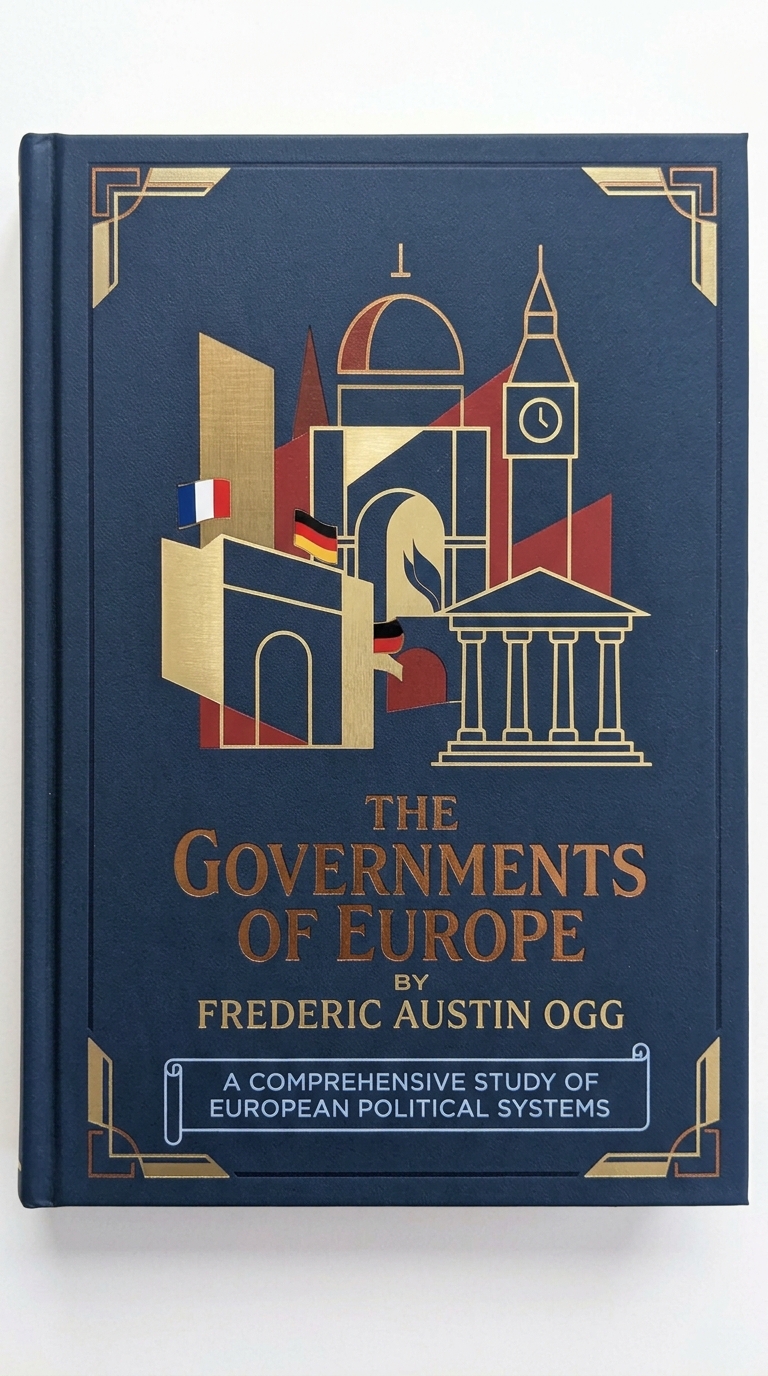
Frederic Austin Ogg’s The Governments of Europe offers a detailed study of the political institutions, constitutional traditions, and historical forces that shaped the states of Western and Central Europe. Written at a time when questions of government and political organization were attracting growing public attention, the work seeks to explain European politics not simply through descriptions of institutions, but by tracing the historical developments that produced them.
Ogg approaches government as the product of long and often complicated processes. Constitutions, parliaments, executive authorities, and systems of representation did not emerge fully formed; they evolved through conflicts over power, social change, political reform, and the gradual transformation of older institutions. For students of political science, this historical perspective provides an essential framework for understanding why European governments developed along markedly different paths despite sharing many cultural and historical connections.
Britain occupies a particularly important position in the book’s opening discussion. Ogg argues that contemporary British political institutions cannot be properly understood without examining their origins centuries earlier. The development of the English constitution is therefore presented as a continuous historical process, beginning with the institutions of Anglo-Saxon England and changing dramatically following the Norman Conquest.
The Norman takeover introduced new patterns of political authority and strengthened the power of the monarchy, while also creating institutional arrangements that would eventually contribute to the development of representative government. Over subsequent centuries, the relationship between the Crown, the nobility, religious authorities, and the wider political community became increasingly complex. Documents and institutions that later acquired fundamental constitutional importance emerged from these struggles over authority.
Among the landmarks highlighted in this historical development is the Magna Carta, which established important principles concerning royal authority and the rights of the political community. Although its original significance differed substantially from its later interpretation, the document became an enduring symbol of the idea that governmental power was subject to established law.
The evolution of Parliament represents another crucial stage in this process. What began as a limited gathering of advisers and representatives gradually developed into a central institution of government. The growth of parliamentary authority reflected broader changes in English society and the continuing contest between monarchs and political forces seeking a greater role in national decision-making.
By placing these developments within their historical context, Ogg demonstrates that modern European political systems are the result of accumulated experiences rather than isolated constitutional designs. Wars, dynastic changes, social movements, economic transformations, religious conflicts, and struggles between competing centers of authority all contributed to the institutional structures that existed when he was writing.
The broader purpose of The Governments of Europe is therefore not merely to catalogue political institutions. It is an attempt to explain the forces behind them. By comparing different European systems and examining their historical origins, Ogg provides readers with a framework for understanding the distinctive character of European governance in the modern era.
The book remains particularly valuable as a window into early twentieth-century political thought. Its emphasis on constitutional history reflects a period when scholars increasingly sought to understand modern government through the long development of political institutions. The work encourages readers to look beyond formal constitutional arrangements and consider the historical circumstances, conflicts, and traditions that give those arrangements their practical meaning.
In this sense, The Governments of Europe presents European politics as an evolving historical story. The institutions of government are shown not as static structures, but as the outcome of centuries of political experimentation and struggle. Ogg’s examination of Britain provides the foundation for a wider comparative study, preparing readers to explore how other European states developed their own distinctive systems of political authority, representation, and constitutional government.